Jul 08,2026
0
China is the world's largest producer and consumer of coatings. Yet for a considerable period, the "industrial skin" of high-end coating materials has been worn predominantly by foreign giants. From flooring to home appliances, from consumer electronics to new energy vehicles, those nearly invisible nanoscale coatings determine a product's first impression on consumers and conceal the deepest strategic maneuvers within the industrial chain.
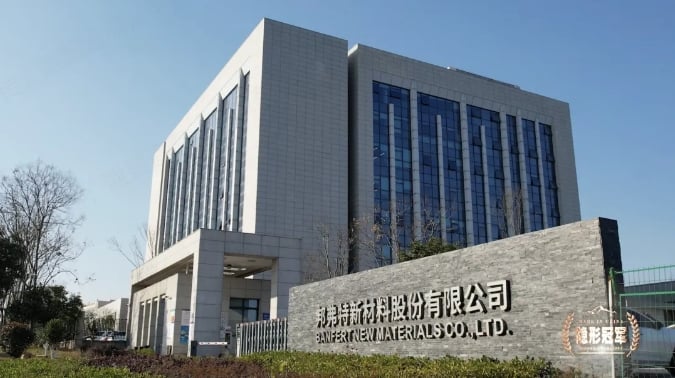
In this edition of Hidden Champions, we step inside Banfert New Materials Co., Ltd., a national-level "Little Giant" enterprise specializing in sophisticated technologies and a Hunan Provincial Manufacturing Single Champion, to observe the micro-level code behind China's manufacturing transformation "from big to strong" through the 19-year technological odyssey of a coatings company.
An often-overlooked perspective in judging a country's manufacturing prowess is to "look at the surface." A floorboard's abrasion resistance rating, the anti-yellowing lifespan of a refrigerator panel, the VOC emissions of an automobile's interior, the scratch resistance of a smartphone casing—these key indicators that determine user experience and product premium are, to a significant extent, achieved by a thin layer of coating. As an industry saying goes, "Coatings are the skin of industry and the first impression a product gives to consumers."
Within China's massive coatings industry, which boasts an annual output exceeding 30 million tonnes, UV-curable coatings represent one of the most promising niche segments. Compared to traditional solvent-based coatings, UV coatings cure instantaneously upon exposure to ultraviolet light, contain virtually no VOC, offer fast curing speeds, high production efficiency, and low overall energy consumption, aligning with the global mega trend of green manufacturing upgrades. However, precisely because of high technical barriers involving interdisciplinary integration—resin synthesis, photo initiator systems, formulation design, coating processes, and equipment synergy—the high-end UV coatings market was long dominated by foreign brands.
After the year 2000, China's real estate sector entered a breakneck golden era. Post-real estate cycle products such as wood flooring, furniture, and building materials experienced explosive growth. Northeast China became a major hub for wood flooring exports, while the Pearl River Delta and Yangtze River Delta grew into global home furnishing manufacturing centers. Yet flooring and furniture factories were forced to pay high premiums for imported coatings. At the time, high-end UV-curable coatings relied almost entirely on imports. Domestic enterprises had neither bargaining power nor access to timely technical services.
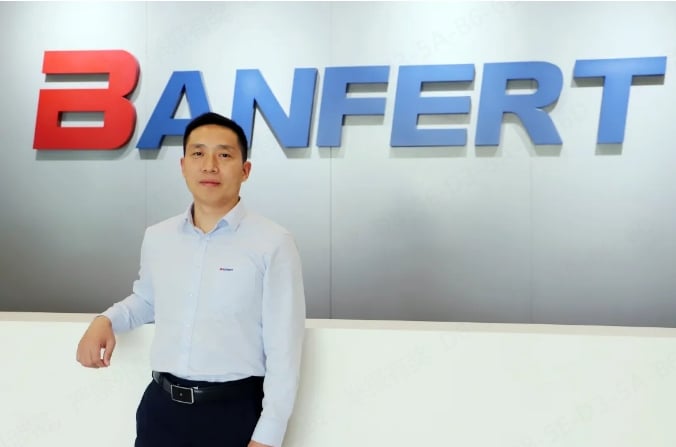
In 2007, Li Xinxiong, a young man from Loudi, Hunan Province, with a chemistry background and seven years of experience in the coatings industry, witnessed firsthand in Northeast China customers paying exorbitant prices for imported coatings while domestically produced alternatives were repeatedly rejected due to gaps in technology and brand recognition. "Having studied chemistry for so many years, I always felt that this hurdle was one the Chinese people could overcome on their own," Li Xinxiong stated.
That year, Li Xinxiong invested his entire life savings of one to two million yuan to establish Banfert in a modest factory building in Yiyang, Hunan Province. "Our living quarters doubled as our temporary laboratory. Humble as it was, we strictly followed product standards to complete our experiments and then sent samples to customer sites for verification. Driving through the night to deliver goods was routine; sometimes the coatings we delivered to clients were still warm from production."
It was this down-to-earth approach of "letting technology speak and using service to break the ice" that enabled Banfert to gradually gain a foothold in the fiercely competitive market with its cost-effective UV coating products. However, what truly established this young company's reputation in the industry was a costly product incident.
In 2010, reconstituted bamboo flooring was prone to cracking due to thermal expansion and contraction, a widely recognized industry challenge. Solutions from foreign brands were relatively limited. Banfert integrated two technical routes and, after repeated testing, introduced its own solution. Yet when the first order was shipped to Australia by sea, an unforeseen incident occurred—local high temperatures caused deformation of the flooring substrate, which in turn led to coating wrinkling, resulting in losses exceeding CNY 3 million for the client.
That year, Banfert's total annual profit was merely five to six million yuan. Although the primary cause of the incident was the substrate's inadequate adaptability to extreme climates rather than the coating itself, Li Xinxiong and his team ultimately opted for full compensation.
"The trust of our clients is more important than anything else," Li Xinxiong said.
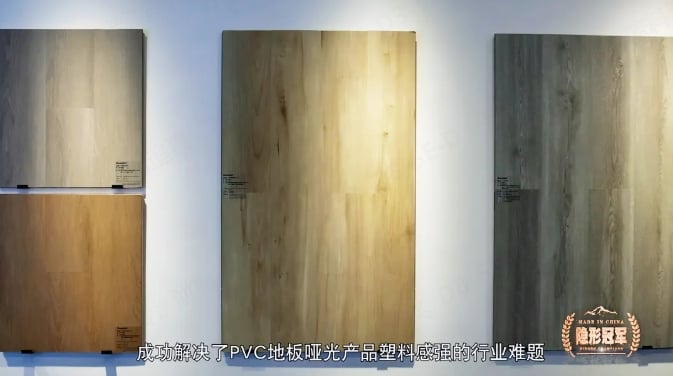
Subsequently, the team immersed themselves in the laboratory, optimizing thermal stability technologies, developing solutions adapted to different climate zones, and jointly discussing processes with clients, thereby thoroughly resolving this industry-wide challenge. The responsibility demonstrated through this seemingly "losing" proposition yielded returns far exceeding CNY 3 million. The client not only chose to continue the partnership but also proactively recommended Banfert within the industry, and a reputation for "trustworthiness" spread rapidly. In 2012, Li Xinxiong formally established UV coatings and waterborne eco-friendly coatings as the company's future strategic direction; by 2014, Banfert's market share in the reconstituted bamboo flooring coatings segment briefly surpassed 90%, making it the "single-product champion" in this niche field.
With the arrival of the consumption upgrade wave, consumer demand for home furnishing products shifted from "functional and durable" to "aesthetically pleasing, textured, and more eco-friendly." The single red and yellow warm tones of traditional flooring no longer dominated mainstream aesthetics; neutral colors, cool palettes, and natural textures became new consumer trends. However, the industry reality was that the vast majority of coatings enterprises remained stuck at the stage of "providing functional coatings," with severely inadequate capabilities in color R&D and texture design, leading to intensifying price wars amid homogenized competition.
"By 2016, the industry had already become excessively competitive. Price competition was extremely fierce, and there wasn't much effort put into innovation," Li Xinxiong recalled.
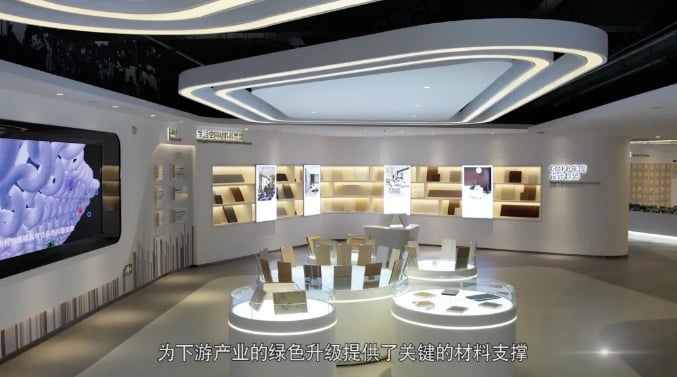
At that time, Banfert already had clients in overseas markets and had discerned shifts in color trends from them. Banfert invited professors from Central South University of Forestry and Technology to serve as color consultants, providing professional training on trends and color science. The CMFP design team it established conducts systematic research and development across four dimensions—Color, Material, Finish, and Pattern—extracting design elements from traditional culture and China-chic aesthetics, and transforming cultural symbols into mass-producible industrial color solutions.
"We are not just selling coatings; we are outputting a complete suite of surface aesthetics solutions. Half of a material's value lies in its performance, and the other half lies in the aesthetic expression it imparts to the product," Li Xinxiong stated.
In 2016, Banfert launched its waterborne wood grain glazing stain technology, which can modify the color discrepancies of low-grade wood through coating penetration, allowing Grade C and D wood to present the texture of Grade A and B wood, significantly reducing downstream enterprises' raw material costs. It can also precisely control color clarity and layering, achieving richer stylistic expressions while preserving the wood's natural grain. "Our client's profit margins increased from less than CNY 5 per square meter to between CNY 20 and CNY 50 per square meter." This innovative coloring technology that "turns wood into gold" was certified as "internationally leading" and continues to guide global home furnishing aesthetic trends to this day.
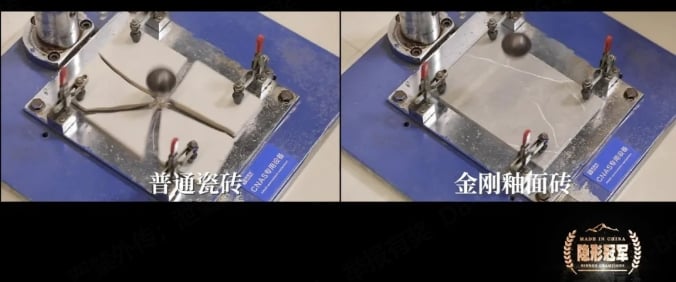
If the "glazing" stain technology transformed the "face" of wood, then the diamond glaze technology has restructured the very "foundation" of flooring materials. This coating technology, designed to replace ceramic tiles and epoxy flooring, endows stone plastic composite flooring with abrasion resistance and mirror gloss comparable to ceramic tiles, while offering advantages such as lightweight, impact resistance, easy installation, and zero VOC emissions, resolving industry pain points like the high breakage rate of ceramic tiles during sea transport and complex installation procedures. To achieve mass production of this technology, Banfert chose the technically more challenging "flexible pre-coated film" route in order to build a global patent moat. The process took five years in total, with a cumulative investment exceeding CNY 30 million, overcoming countless failures such as low mass production yield and board warping caused by coating shrinkage, ultimately breaking through the core challenges of the full-coating process.
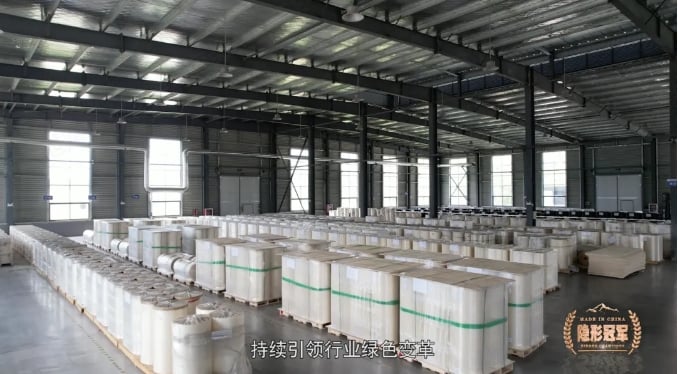
Today, the diamond glaze coating technology has established patent layouts in over ten countries and regions, including China, the United States, Europe, and ASEAN. Leading U.S. building material suppliers have proactively sought collaboration, willing to pay patent royalties in exchange for exclusive licensing rights in the North American market. This is exceptionally rare in China's coatings industry. In the past, it was Chinese enterprises paying patent fees to overseas giants; now, the flow has begun to reverse.
"In the past, we opened markets relying on cost-effectiveness; in the future, we must define value through technology," Li Xinxiong candidly stated. During the industry reshuffle period, competing on price alone cannot lead far. Only enterprises that truly master core technologies and possess global patent barriers can endure through the cycles. From domestic substitution to technology outbound, Banfert is precisely forging a "specialized, refined, distinctive, and innovative" path—"an opening one foot wide, dug a kilometer deep."
As the industry enters an era of stock competition, the growth ceiling for single product categories is gradually becoming apparent. In the real estate downward cycle, the home furnishing and building materials sector has contracted overall, with leading enterprises all seeking a second growth curve. For Banfert, the answer lies in two directions: vertical and horizontal extension of the industrial chain, along with globalized production capacity and patent deployment.
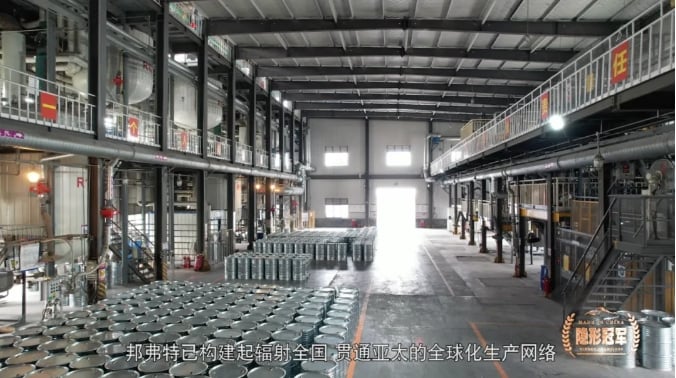
Vertically, Banfert has laid out resin synthesis operations, mastering independent production capabilities for core raw materials through its two major bases in Guangdong and Shandong. Resin is the core foundation of coating products. Independent synthesis not only controls costs and ensures supply chain security but also safeguards core technological confidentiality, constructing deeper technological barriers. Currently, Banfert has deployed four domestic bases, two overseas bases, four warehousing centers, and multiple overseas service agencies globally.
Horizontally, Banfert has expanded from a single coating product to integrated "Coating-Adhesive-Film" solutions. Business segments including functional film materials, eco-friendly adhesives, consumer packaging coatings, tinplate coating coil resins, and new electronic materials have been successively launched, extending service scenarios from home flooring and panels to fields such as consumer electronics, food packaging, engineering machinery, and building exterior walls. In 2023, Banfert signed an agreement with the renowned German enterprise Kleiberit to jointly establish the Kleiberit Asia-Pacific R&D Center and production base, venturing into the PUR eco-friendly adhesive sector and further refining its comprehensive green materials industrial chain layout.
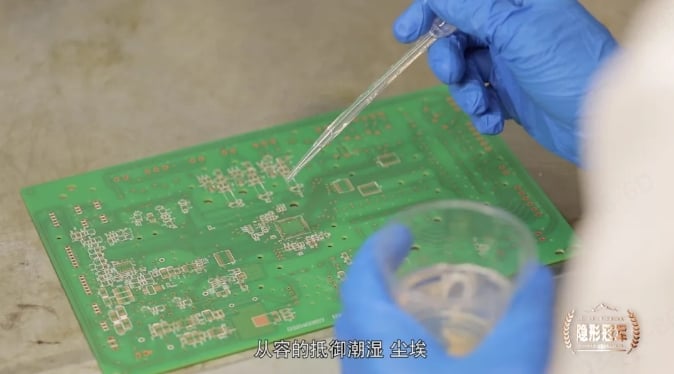
To date, Banfert has undertaken 11 national and provincial scientific research projects, filed over 100 patent applications cumulatively, led the formulation of two industry standards including UV-Curable Coatings for Plastic Flooring, and participated in the formulation of 20 national, industry, and group standards including Wood-Plastic Composite Flooring. In a provincial scientific research project jointly undertaken with Hunan University, Banfert's green high-performance waterborne resin was awarded the Second Prize of the Hunan Provincial Technology Invention Award. Its UV flooring coating products passed the rigorous evaluation of the globally recognized California Proposition 65 environmental standards, making Banfert the first and currently the only high-end coating material enterprise in China to pass this test. The newly released PUV sealing and strengthening technology for wood-based panel surface treatment has once again conquered a globally challenging processing issue for wood-based panel substrates, receiving the First Prize of the China Wood Industry Science and Technology Invention Award and being certified as an internationally leading groundbreaking achievement.
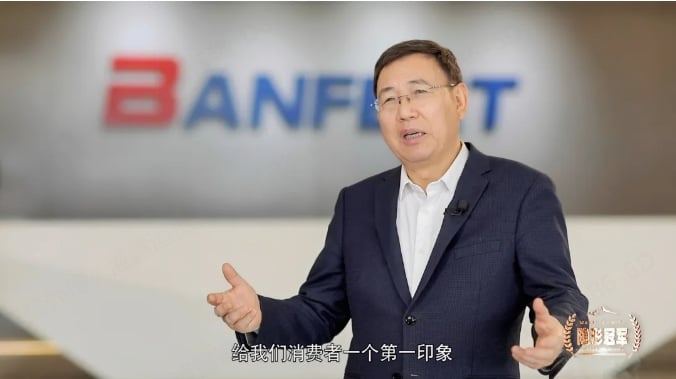
Xin Wang, Chairman and Director of the China Manufacturing Think Tank, stated after researching Banfert: "Starting from the 15th Five-Year Plan period, the optimization and upgrading of traditional industries will become one of the core trends in manufacturing upgrade. Banfert is a quintessential case of optimizing and upgrading traditional industries. It has recreated traditional chemical materials using new materials, new processes, and new formulations, infused with the philosophy of green development."
In Dr. Xin Wang's view, many people's understanding of manufacturing upgrade is limited to emerging industries. Yet in reality, deep technological cultivation within traditional industries can also give birth to world-class competitiveness. "We see leading enterprises across various industries—Haier, Wuliangye, Gree; in the flooring industry, companies like Walrus New Material,Yihua Rundong New Material,CFL Flooring, Zhejiang Kingdom New Material Group Co.,Ltd,Beier,and Arte Mundi—the most intuitive surface part of their products, which most shapes the consumer's first impression, is precisely what Banfert is working on. This 'surface work' may seem inconspicuous, but it determines the texture, aesthetic appeal, and eco-friendly properties of the final product. Banfert has taken it to the extreme."
In the vast manufacturing system, coating materials are, fittingly, a "supporting character," adhering to various substrates and never becoming a brand name recognized by end consumers. Banfert often self-deprecatingly describes itself as doing "surface work." Yet beneath this "surface work" lies nanoscale material innovation, meticulous refinement of the entire process chain, an ultimate pursuit of environmental sustainability, and a long-term commitment to customer value. From a small factory in Yiyang to a globalized new materials enterprise; from imitating while chasing the footsteps of foreign capital to having overseas leading enterprises pay patent royalties—Banfert's growth is an epitome of countless specialized and sophisticated enterprises.
Starting from the 15th Five-Year Plan period, China's manufacturing sector will enter a phase that places even greater emphasis on "specialization" and "depth." When more enterprises like Banfert are willing to spend a decade or two in a niche field doing "surface work"—doing the things invisible to the naked eye but that determine the ultimate quality of a product—the transformation of Chinese manufacturing "from big to strong" will genuinely possess its most solid micro-foundation.


 EN
EN
 AR
AR
 DA
DA
 FR
FR
 DE
DE
 IT
IT
 JA
JA
 KO
KO
 PT
PT
 RU
RU
 ES
ES
 SV
SV
 TL
TL
 ID
ID
 SR
SR
 VI
VI
 TH
TH
 MS
MS
